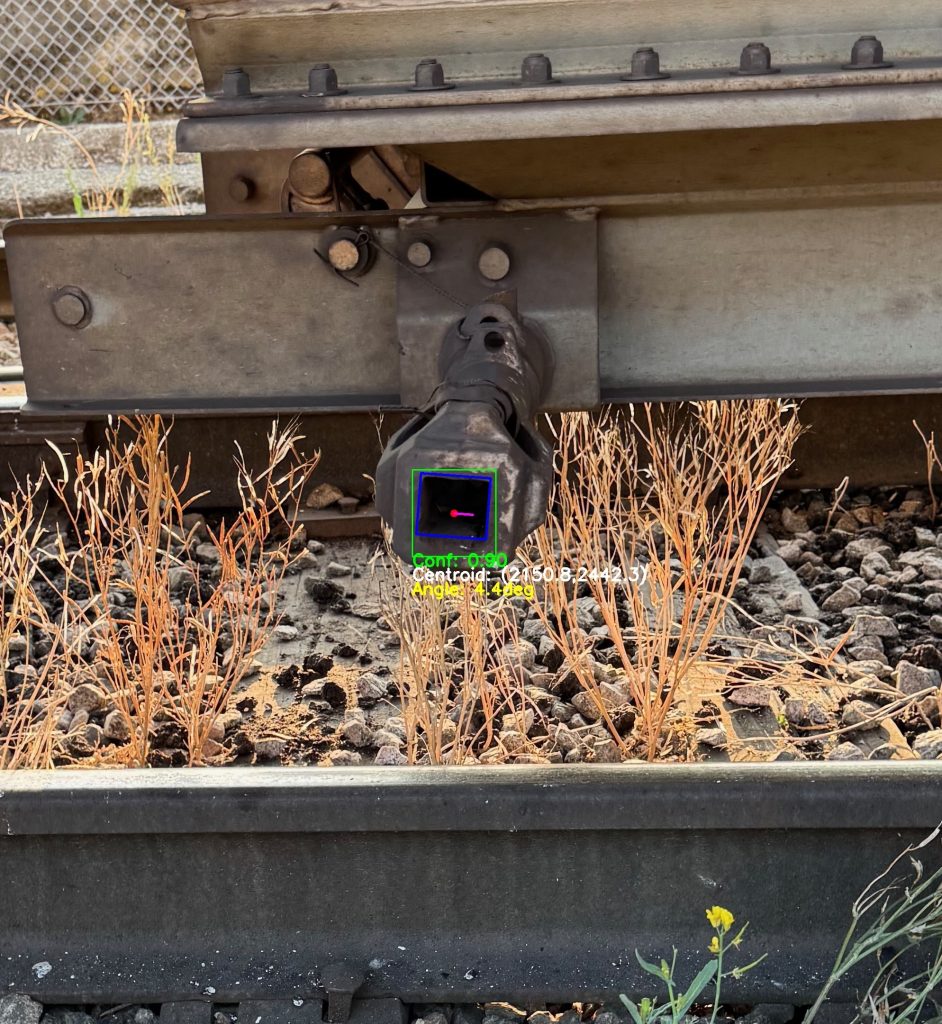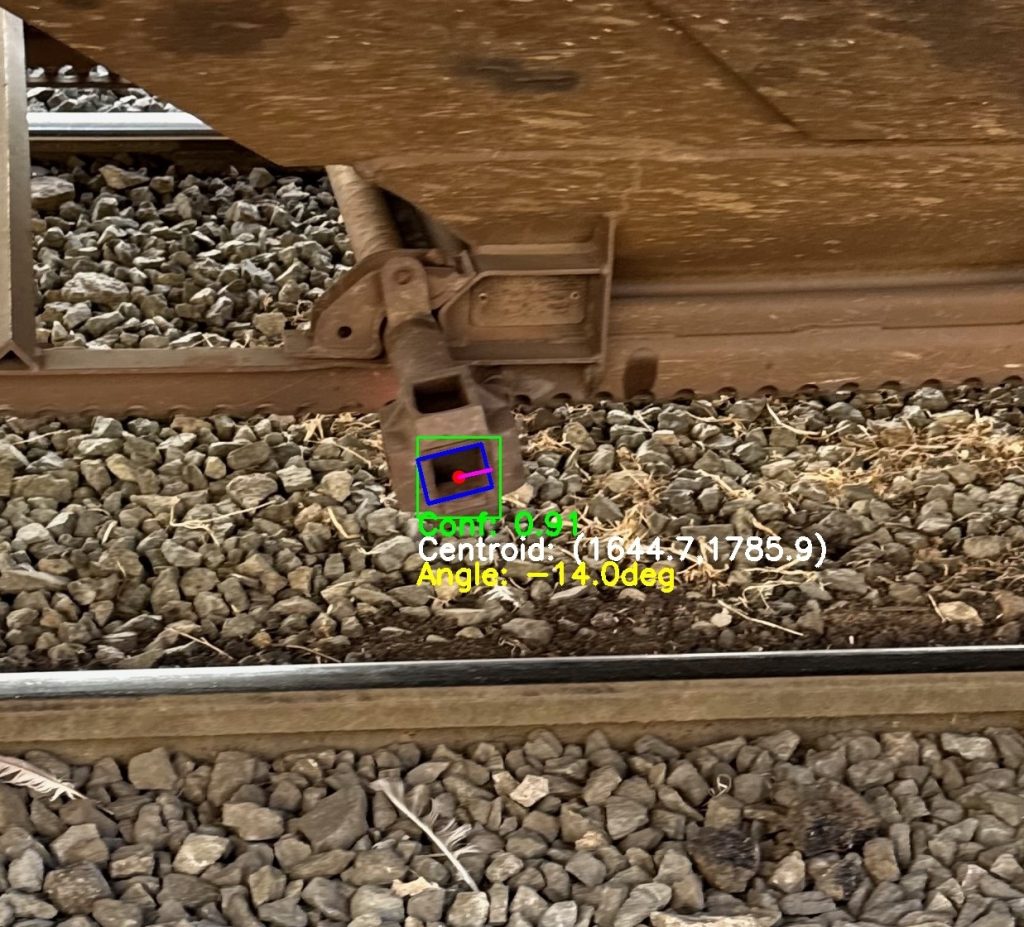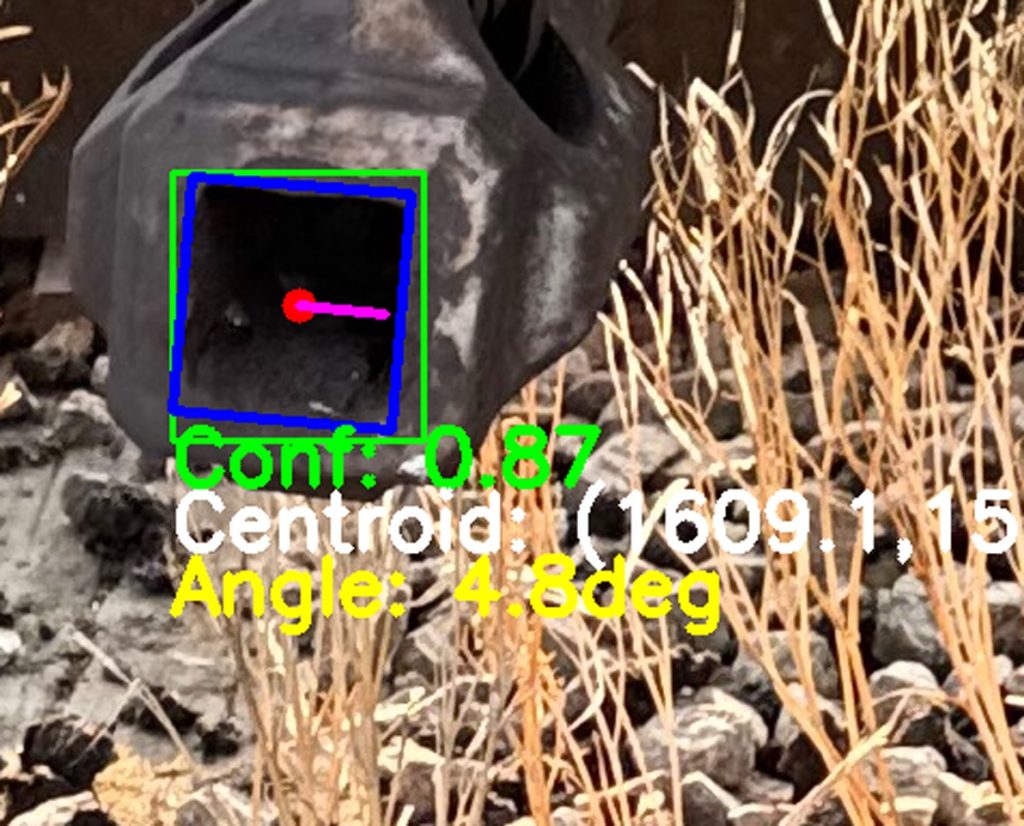
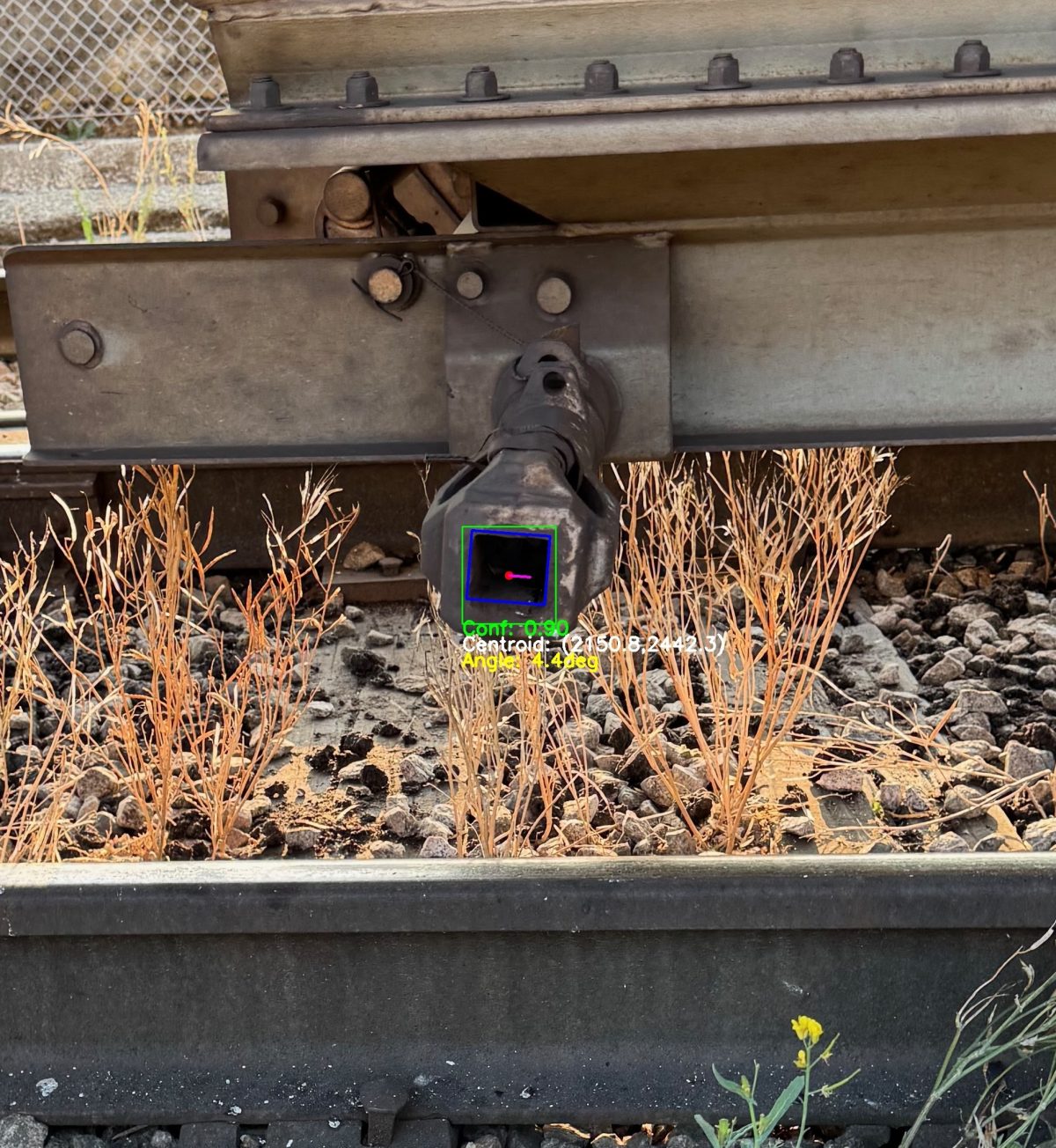
This project was a machine vision proof of concept that I delivered to a large multinational commodity distribution company in Western Canada. The company had recently implemented an automated railcar unloading system and wanted to see whether machine learning could improve how the system identifies capstan sockets on incoming train cars, including their location and orientation.
The existing vision system struggled with the variability between railcars; different geometry, capstan designs, lighting conditions, debris and other environmental factors. Acquisition times were over 1 second and the success rate was below 80%. The goal of the POC was to show that a well trained model could outperform the legacy methods, while providing a clean, structured data stream that could be integrated into the existing control system in real-time.
I captured still images and video of multiple capstan types, labelled them and used them to train a custom model. The model successfully detected capstans on 100% of the validation set, with confidence levels consistently above 85%, and was able to infer both location and rotation. When run on live video, it achieved acquisition times under 25 ms, with zero false positives on the surrounding train structures.